Carpet Beetle Larvae: Shape, Hairs, Damage, and Lookalikes
Identify carpet beetle larvae from photos using shape, hair patterns, fabric damage, and lookalike clues before deciding when cleaning or pest help is needed.
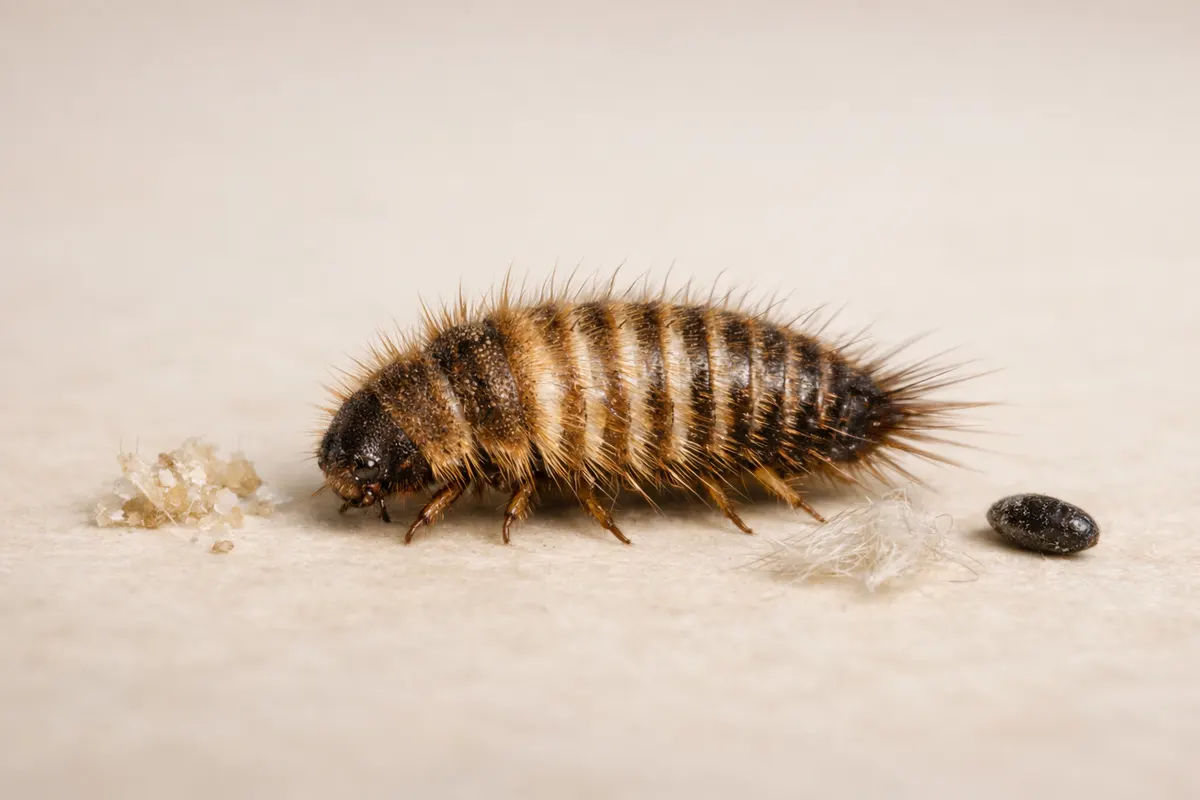
Quick answer for carpet beetle larvae
Carpet beetle larvae are small, tapered, hairy beetle larvae often found near natural fibers, stored fabrics, and baseboards. The most reliable photo clues are body shape (elongated and carrot-shaped), dense tufts or brush-like hairs, and the presence of shed skins or clustered damage on wool, fur, or feathers.
A single photo can strongly suggest carpet beetle larvae when those traits appear together and match the context — for example, larvae in a closet among wool sweaters or along the edge of a rug with irregular holes. However, color alone, one fuzzy shot, or a single hole in fabric is not proof.
Use a checklist: capture clear, close photos showing the whole larva and nearby damage or debris; note the location and material affected; look for shed skins or multiple larvae. Treat the app or an identification tool as a first-pass research step and plan follow-up checks if the results are uncertain.
Strongest visual clues
When evaluating photos for carpet beetle larvae, prioritize structural details that survive poor lighting or small image size. Shape, hair pattern, and context are more reliable than exact color or tiny surface markings.
Look for an elongated, somewhat flattened, tapered body with a rounded head and a narrower rear. Many carpet beetle larvae have a distinctive ‘carrot’ outline: wider toward the head and narrowing slightly toward the back, sometimes ending in a tufted brush of hairs.
Hairs (setae) are a central diagnostic clue. Carpet beetle larvae typically show dense, often long hairs arranged in tufts or bands across segments. These hairs can be spine-like or brushy; on camera they appear as fuzzy edges or a visible fringe along the body.
Contextual clues are nearly as strong as anatomy: larvae found in wardrobes, under baseboards, inside stored boxes of wool/furs/feathers, or next to irregular chew holes in fabrics increase the odds that the specimen is a carpet beetle larva. Multiple larvae, shed skins, fine dust (frass), or lines of tiny holes in garments are strong supporting evidence.
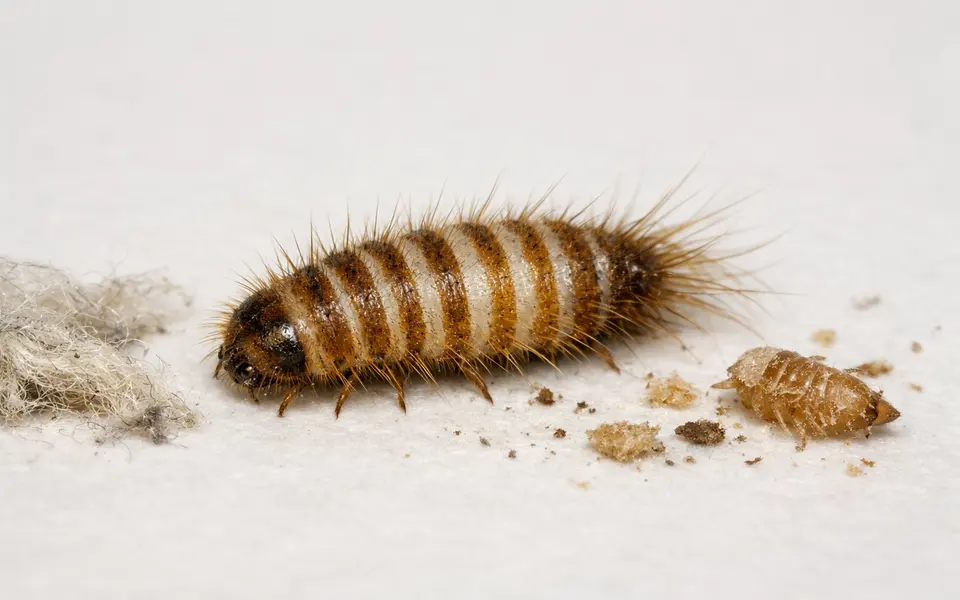
- Body shape: elongated, tapered (carrot-shaped), often slightly flattened.
- Hairs: tufted or brush-like setae visible as a fuzzy fringe or rear brush.
- Size context: often a few millimeters to several millimeters long; older larvae can appear noticeably larger.
- Shed skins: translucent molts near where the larva was found.
- Damage pattern: irregular holes in natural fibers, frass (tiny pellets), and concentrated damage on wool, fur, or feathers.
- Location: closets, attics, under furniture, stored textiles, and near baseboards.
Weak signals
Some traits tempt quick identifications but are unreliable on their own. Color, small size without hair detail, or a single hole in fabric are weak signals because many insects and non-insect causes can show the same signs.
Reflections, motion blur, or partial photos often make hairs look like fuzz or mold. A brownish or reddish tint alone doesn’t confirm carpet beetle larvae — lighting, substrate color, and image compression can distort hues.
Lookalikes include clothes moth larvae (which are smoother, often with a darker head and no rear tuft), certain detritivorous beetle larvae, and tiny caterpillars. Also, broken fibers, textile rot, or rodent nibbling can mimic insect damage, so rely on compound evidence rather than a single weak clue.
- Color alone — lighting and camera balance can mislead.
- One fuzzy photo from a distance — hairs and small structures vanish.
- Single holes in fabric without frass or shed skins.
- Assuming size without an obvious scale (coin or ruler).
- Misreading lint, dust, or fiber clumps as larvae.
Comparison workflow
Compare likely matches using multiple clues in this order: context, shape, hair pattern, and damage signs. Start by asking where the specimen was found, what material is affected, and how many suspect specimens or sheds are present.
Next, use close-up photos (or a loupe) to confirm body outline. A larva with a tapered posterior and alternating dense hair tufts points toward carpet beetle larvae. Clothes moth larvae typically have smoother, cylindrical bodies and move with a distinct wriggling gait that you can sometimes capture on video.
Then compare hair details. Carpet beetle larvae often have clustered tufts or a brush at the tail end; if the tail shows a compact tuft or spines, that favors dermestid-type larvae. Absence of tufted hairs and presence of a silken case or webbing favors case-bearing moths or cloth moths.
Finally, weigh damage and debris. Gather a simple checklist: multiple larvae or molts, concentrated holes in natural fibers, frass (tiny pellets or powder), and the season (spring–fall activity is common). If most clues line up, the identification is likely; if clues conflict, mark the result as uncertain and collect more evidence.
- Step 1 — Context: note location, affected material, and number of specimens.
- Step 2 — Shape: confirm tapering, body segmentation, and head shape.
- Step 3 — Hairs: look for tufted setae or a rear brush; check for molts.
- Step 4 — Damage: inspect nearby fabrics for holes, frass, or clustered wear.
- Step 5 — Confidence check: require at least three independent clues before calling it a carpet beetle larva.
App workflow
After you’ve used the checklist to collect clear photos and context notes, use Bug Identifier as a deliberate next step: treat the app as a first-pass research tool rather than a final authority. Open the app on your device and add photos that show the whole larva, a close macro of the hairs, and the surrounding material or damage.
Aim for multiple angles and a scale reference (coin, ruler) in at least one shot so the app can better assess size relationships. Include a photo of the damage pattern—a hole in a sweater or a line of tiny holes in a rug—because matching specimen traits to the affected material improves confidence.
Record short notes inside the app about where you found the specimen, when, and what materials were affected. If the app returns ambiguous results, use them as research notes: compare suggested matches against the checklist above, document any molts or additional sightings, and if needed, consult a local extension service or pest professional for confirmation.
If you want broader reading before acting, our Bug Visual Checklist: Common Clues, Lookalikes, and Next Steps collects general visual-clue guidance and may help you interpret app results. Use the app to prioritize follow-up actions (vacuuming, isolating textiles, monitoring) but avoid immediate chemical treatments based on a single image alone.
- Take 3–5 photos: whole specimen, close-up of hairs, damage context, and scale.
- Note location and affected material in the app’s notes field.
- Use app output as a first-pass suggestion, not final proof.
- If uncertain, collect more photos or consult an expert before major treatments.
Related guides
Check your photos with Bug Identifier
After you’ve captured clear photos and noted context, open Bug Identifier on your device to run a first-pass check. Include whole-specimen and close-up shots, a scale reference, and images of any fabric damage. Treat the app’s suggestions as research notes—collect more evidence or consult an expert before taking major actions.

Frequently asked questions
How do I tell carpet beetle larvae apart from clothes moth larvae?
Carpet beetle larvae usually have a tapered, carrot-like shape and distinct tufts or brushy hairs, sometimes with a concentrated rear tuft. Clothes moth larvae are smoother, more cylindrical, often create silken webbing, and lack the clustered rear hair brush. Also compare damage: carpet beetles commonly target wool, fur, and feathers; clothes moths can make similar holes but often leave silken cases or webbing.
What damage patterns suggest carpet beetle larvae rather than other causes?
Look for irregular holes concentrated on natural fibers (wool, fur, feathers), fine granular frass near damage, and multiple affected items in the same storage area. Finding molt skins or many larvae together is strong evidence. Single isolated holes without frass or molts are less decisive and could be mechanical damage or other pests.
Can one photo confirm a carpet beetle larvae infestation?
One clear photo that shows the characteristic shape, tufted hairs, and nearby damage can strongly suggest carpet beetle larvae, but it rarely confirms an infestation by itself. Use multiple photos, note location and affected materials, and watch for additional signs like molts or more specimens before treating the area.
What safe next steps should I take if I suspect carpet beetle larvae?
Start by isolating affected textiles (seal them in plastic bags), vacuum thoroughly around baseboards and storage areas, launder or dry-clean susceptible clothing, and inspect stored items. Use monitoring traps or visual checks over a few weeks. Consider professional inspection before using pesticides, especially for large or valuable fabric collections.