
Bug Identification Key: A Practical Photo-Based Guide
A concise bug identification key using photo clues, body features, and stepwise checks. Learn which visible details matter and when to seek verification.
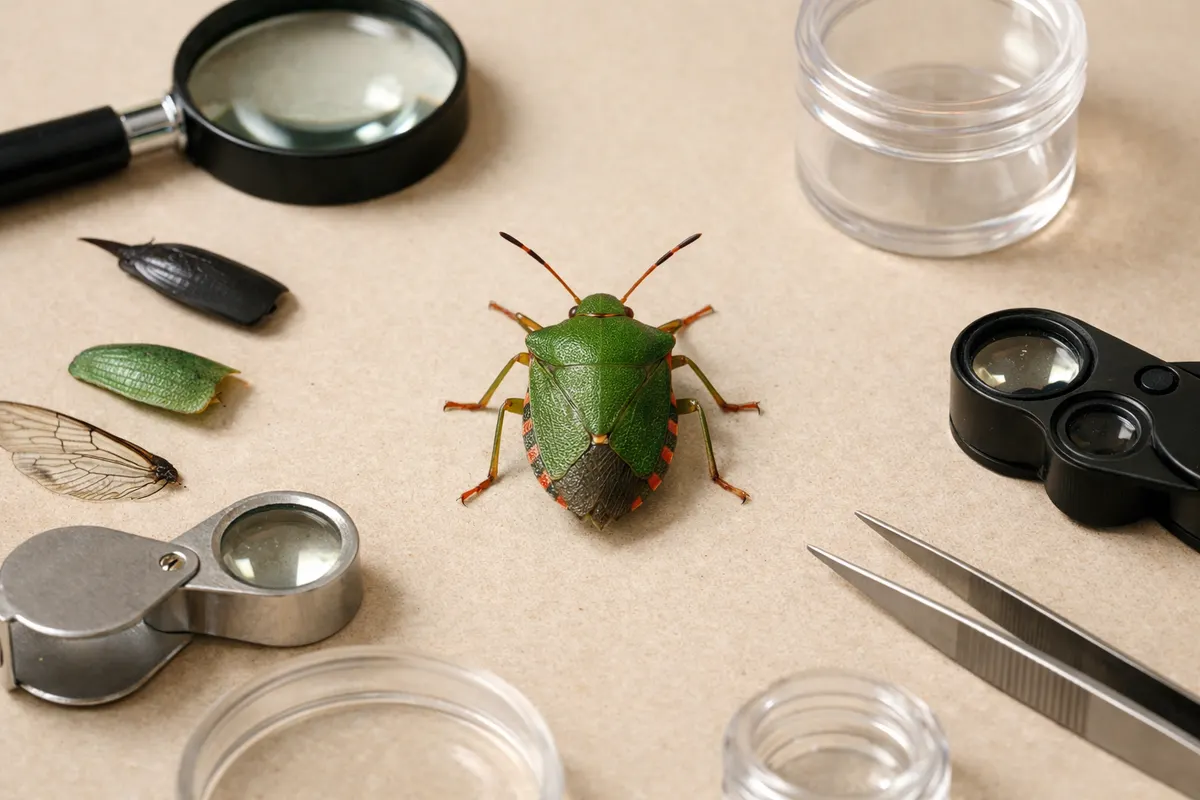
Quick answer: using a bug identification key
A bug identification key turns visible features in a photo into a narrowed list of likely groups. Start by checking the number of body segments, leg count, antenna shape and any wing structure you can see; those four features eliminate the largest number of wrong paths quickly. For example, an insect with three clear body sections and six legs is in the insect class, while eight legs points to spiders or similar arachnids.
In practice, a single clear photo can point you to a family or genus, but rarely to a definitive species without scale, multiple angles, or life-stage context. Use the key as a triage tool: identify likely groups, rule out lookalikes, and then gather one or two more photos (dorsal and close-up of head/antennae) before locking in an identification.
- Primary quick checks: body segments, leg count, antennae, wings.
- Use scale (a coin or ruler) and two angles for better confidence.
- If the bug is inside and active, note behavior and time of day.
How a bug identification guide works
A bug identification guide breaks identification into observable decisions: is the creature an insect or an arachnid? Does it have two wings, four wings, or none? Are the antennae long, clubbed, or feathery? Each yes/no or short-choice step narrows the pool of possibilities until you reach a plausible match. The process is deterministic: the same visible traits should lead to the same branch in the key.
Think of the guide as a flowchart you follow from broad features down to finer details. Good keys prioritize features that are easy to see in photos: leg count, overall body shape, wing placement, and antenna form. Relying on tiny color patterns or subtle genital features in a single photo risks misidentification.
A practical bug identification guide also explains common lookalikes and how to avoid them. For instance, some beetle larvae can resemble fly larvae, and some moths have resting postures that make them look like butterflies. The guide recommends additional checks you can do with minimal equipment—one quick macro photo, a note of habitat, or a short video of movement.
- Follow broad-to-fine traits: class → order → family → genus.
- Prioritize features visible in photos (legs, wings, antennae).
- Record context: habitat, time, behavior, and any damage or bite marks.
Key clues
The most reliable bug visual clues are those that tend not to change with age or lighting: how many body segments, leg count, antenna structure, and wing placement. Start with body segments: insects show three main segments (head, thorax, abdomen), while many non-insect arthropods have two or fused segments. A clear dorsal photo that shows segment boundaries is the fastest route to class-level separation.
Leg count is a decisive clue. Count visible legs and note whether they attach to the thorax or mid-body. Insects have six legs; arachnids have eight. Some lookalikes—like centipedes—have many legs and distinct segments. If a leg is missing or tucked, take multiple photos or a short video to confirm the count before moving on.
Antennae shape is often diagnostic: filiform (thread-like), clavate (clubbed), bipectinate (comb-like), or absent. For example, many moths have feathery antennae (especially males), while beetles often have clubbed or serrate antennae. Wings matter too: note how many, whether they fold flat over the abdomen, whether they form a roof-like tent, and if visible, the wing venation pattern.
- Body segments: three = insect; two/fused = check arachnid or crustacean.
- Leg count: 6 = insect; 8 = spider or similar; many = myriapod.
- Antennae: shape and length distinguish groups (feathery vs. clubbed).
- Wings: presence, number, fold style, and venation narrow orders (moth vs. beetle).
- Coloration and pattern help but can mislead—focus on structure first.
Step-by-step bug identification key workflow
1) Stabilize the specimen and capture scale. If the bug is alive and safe to photograph, place a coin or ruler nearby or include your finger at a gentle distance to show size. Small changes in perceived size will lead you down the wrong branch in the key; scale is essential for many beetles, moths and nymph stages where size distinguishes species.
2) Take a set of standard photos: dorsal (top), lateral (side), close-up of head/antennae, and any ventral or leg detail you can safely get. If the bug is in motion, a short video can reveal gait and leg placement—helpful for separating fast-moving flies from slow beetles. Two good angles reduce false positives dramatically.
3) Run the visible features through the key: confirm body segments and leg count, inspect antennae, note wings and wing folding, and then check appendages (mouthparts, cerci, or spines). At each step, record why you chose one branch over another—this makes it easier to revisit a choice if new photos change your interpretation.
4) Cross-check habitat and behavior. Habitat narrows possibilities: a moth found inside near a light is a different candidate list than a beetle under rotting wood. Behavior (day vs. night activity, flight patterns) resolves common lookalikes. Finally, compare to reference images or use a vetted identification tool to get candidate matches, then decide whether you need expert verification.
- Standard photo set: dorsal, lateral, head close-up, scale reference.
- Document habitat and behavior for context-based narrowing.
- Keep notes of feature decisions to re-evaluate with new images.
- When in doubt, collect more photos rather than guessing a species.
Examples: common photos and identification checks
Example 1 — Beetle on a porch light: A dorsal photo showing hard elytra (hardened front wings) and a distinct head-thorax-abdomen layout points to a beetle. Counted legs: six; antennae looked clubbed. With that evidence you can follow a beetle branch in the key and rule out moths and true bugs. For deeper help on beetles, see the Beetle Identification page (https://bug-identifier.app/identify/beetle-identification) for typical elytra and antenna examples.
Example 2 — Small moth resting on a curtain: Look for roof-like wing resting posture and feathery antennae in males; wings with scaled surfaces show venation when backlit. A lateral photo that shows wing overlap is decisive. If the moth is near a light at night, behavioral context supports the moth hypothesis.
Example 3 — Woolly-looking larvae on plant leaves: Body segmentation and prolegs will separate caterpillars (Lepidoptera larvae) from sawfly larvae (Hymenoptera) and certain beetle larvae. A close-up of the prolegs and head capsule often resolves these groups. Use the Bug Visual Checklist (https://bug-identifier.app/blog/bug-visual-checklist) for quick trait matches and lookalike warnings.
Across these examples, the same core steps apply: confirm basic body plan, count legs, inspect antennae, and add scale and behavior before concluding. Photos that miss the head or underside frequently force incorrect guesses—always get at least one head-focused shot and a scale reference.
- Beetle: hardened elytra, clubbed antennae, six legs — link to beetle guide.
- Moth: scaled wings, tented or roof-like resting posture, feathery or filamentous antennae.
- Larvae: prolegs and head capsule critical to separate caterpillars from sawfly larvae.
- Use the Bug Visual Checklist page for quick side-by-side traits (internal resource).
Limitations of a bug identification key
Keys are only as reliable as the evidence you provide. Low-resolution photos, odd lighting, missing scale, or images that hide diagnostic features (head, mouthparts, ventral side) drop identification confidence quickly. Many small insects and immature stages lack obvious adult traits, producing only a best-guess to family or genus instead of a confident species-level match.
Lookalikes and convergent evolution create unavoidable uncertainty: for example, some non-insect arthropods mimic insect shapes, and unrelated moths may evolve nearly identical wing patterns. Sexual dimorphism and seasonal forms can also mislead—male antennae may be feathery while females are plain, which affects which traits you should rely on.
Safety and verification are practical limits. Never assume a bug is harmless based on a photo alone; if you suspect venomous spiders, stinging insects near food, or pests damaging a structure, seek a local expert or pest professional for confirmation. If a bite or allergic reaction is involved, prioritize medical advice rather than identification.
When to escalate: if the identification could change a medical, legal, or pest-control decision, verify with an expert or a lab specimen. For non-critical curiosity, use the key to narrow to a small set of candidates and document why you chose them—additional photos or expert review can raise confidence to a usable level.
- Low-resolution photos often limit identifications to family level.
- Immature stages and sexual dimorphism create lookalike traps.
- When safety, health, or property is involved, seek professional verification.
- Document and retain original photos; don't alter or heavily crop away scale.
Related guides
Try a focused photo scan with Bug Identifier
After you’ve checked body segments, leg count, antennae and wings, use the Bug Identifier tool to quickly scan your photos for candidate matches: https://bug-identifier.app/tools/bug-identifier. The tool works well as a first pass—keep scale and a head close-up ready, and treat any match as a starting point for confirmation if the identification affects health or property decisions.
Take the next step →Frequently asked questions
What bug types could this be when I find a small dark insect indoors?
Small dark insects found indoors are commonly beetles (many stored-product species), ants, cockroach nymphs, or small flies. Use a dorsal photo with scale and a close-up of the head to separate those options: beetles show hardened elytra, ants have distinct node-like petioles between thorax and abdomen, cockroach nymphs have broader, flattened bodies, and flies have a single pair of wings. If behavior or damage suggests a pantry pest or structural issue, preserve samples and consult a local extension office or pest professional for species-level confirmation.
How can I improve photos so a bug identification key gives a better answer?
Include a scale reference (coin or ruler), take a clear dorsal and a lateral shot, and capture a close-up of the head/antennae. Use diffused lighting to avoid glare on shiny wings and try backlighting once to reveal venation. If possible, take a short video of the insect walking or flying; movement reveals leg placement and gait, which can be diagnostic. Keep the background neutral and steady the camera to avoid blur—multiple sharp photos beat one fuzzy image every time.
When should I use a bug identification guide versus asking an expert?
Use a bug identification guide for quick triage and to narrow possibilities when the outcome is informational or curiosity-driven. Ask an expert when the identification affects medical treatment, allergic reactions, pest-control decisions, or legal matters (for example, documented infestations). Experts will often require physical specimens or high-quality, multiple-angle photos plus context like location and host plant to provide a confident species-level ID.
Can an app replace a physical check when I need a quick ID?
Apps are excellent as a first-pass tool to suggest likely matches, especially when you supply clear photos with scale and multiple angles. However, apps are probabilistic and can be misled by poor images or lookalikes. Treat app results as candidate identifications rather than definitive answers. When accuracy matters—medical, agricultural, or legal contexts—follow up with an expert or a local laboratory for confirmation.