Ant Identification
Ant Identification — What to Look For, With Real Examples
Learn which visual clues a photo can confirm for ant identification, which checks to do next, and how a photo-first approach speeds up safe, practical ID.
Ant identification from a photo is often the fastest first step when you find ants in or near your home. A good image can reliably show body shape, size relative to nearby objects, color pattern, and distinct features like a constricted waist or visible mandibles — all useful for narrowing the likely genus.
Photos are less reliable for behavior-based clues (aggression, trail pheromones) and for confirming nest locations or infestation severity. Treat a single-photo ID as an informed first pass: it points to likely species groups and next checks you can do safely.
If you want a practical next step after spotting ants, focus on documenting the visible clues, noting where you found them, and preserving context in the image. That prepares any photo-identification tool to give a clearer, evidence-based result.

How identification works
Step 1
Snap a photo
Take a clear, well-lit photo of your item in the Bug Identifier app.
Step 2
Get an instant identification
The app reads the visible clues and returns the closest matches in seconds.
Step 3
Review the details
Compare the result with your photo, review any uncertainty, and check the suggested next steps.
Key visual signals to check for ant identification
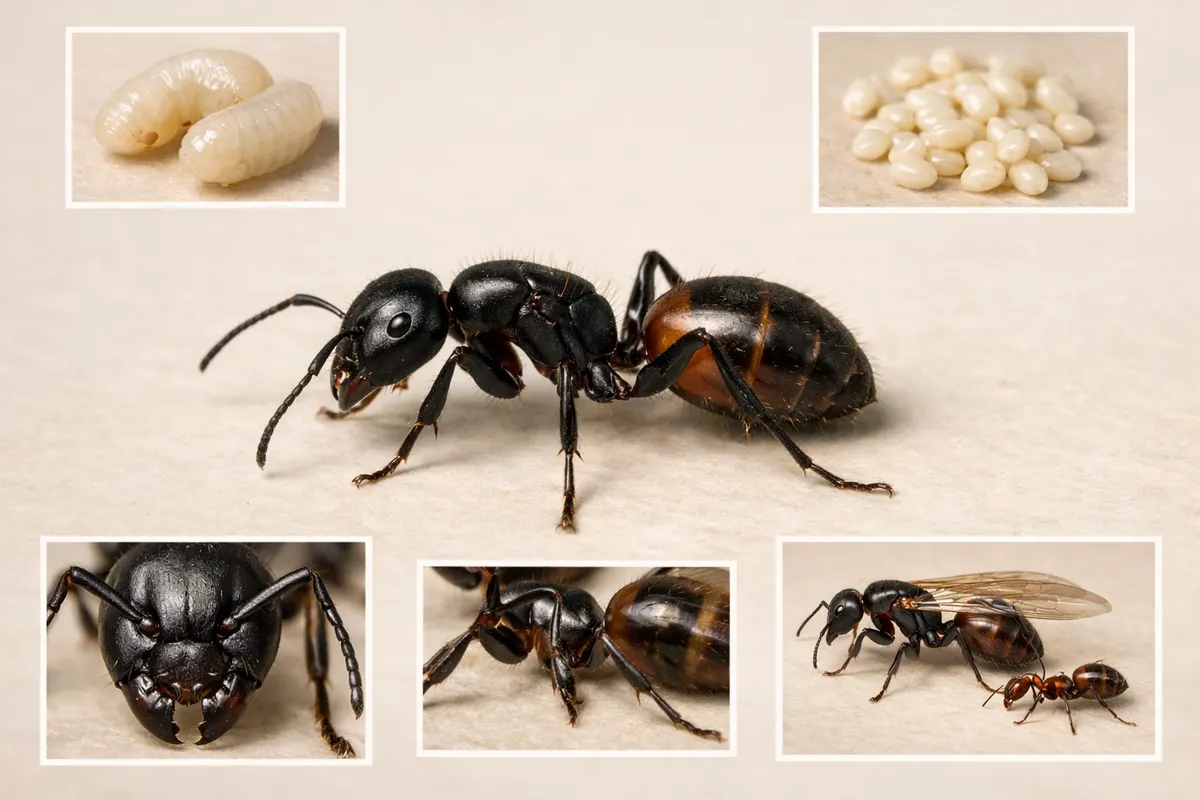
Before sending a photo or using an app, photograph the ant from multiple angles if possible: a top-down view and a clear side view help reveal body segmentation and the number of petiole nodes (small waist segments). Include a common object like a coin or ruler for scale.
Color and sheen matter: some species are uniformly black or brown, while others have red, orange, or bicolored patterns. Look for a shiny versus matte exoskeleton and any pale hairs or spines on the thorax — those features narrow the candidate set.
Antennae shape and segments are diagnostic: ants have elbowed antennae. If the antennae appear long and segmented or short and clubbed, note that in your description. Also check leg length and relative head size; these help separate genera.
Contextual clues are important. Note habitat (inside a kitchen, along a foundation, in potted soil), time of day, and whether you saw workers carrying food or excavated material. These observations complement photo evidence and guide safe next checks.
- Take a clear side view to show waist nodes and thorax shape.
- Include scale in the photo (coin, ruler, or common object).
- Note color pattern: uniform, bicolored, or red/orange hues.
- Record location and surface (wood, soil, kitchen counter).
- Look for spines or hairs on the thorax and mandible shape.
- Capture multiple ants together if you see a trail or group.
What an ant identification result will include
A focused ant identification result aims to translate your photo and observations into a concise set of fields: likely group or genus, distinguishing traits visible in the image, confidence level, and recommended next checks. The goal is to give practical leads, not definitive lab verification.
Typical fields you’ll see in a photo-based result include a short species or genus suggestion, the visual clues that supported that suggestion (for example, two petiole nodes plus bicolored body), and a confidence note that explains whether the photo provided unambiguous traits or left important details obscured.
Results also point to safety or damage signals to watch for — for example, visible wood excavation that suggests structural risk — and practical next steps for homeowners, such as targeted photos to take, where to look for nests, or when to consult a pest professional.
- Likely group/genus with short explanation of visual evidence.
- Confidence level describing which traits were clear or missing.
- Photo highlights pointing to the decisive features.
- Suggested next photos and safe observation steps.
- Damage signals to inspect (e.g., frass, wood shavings).
- Context notes that tie habitat to likely species.
Ant lookalikes: species and insects commonly confused
Several insects and ant species are easily mistaken for one another in casual photos. For house sightings, common confusions include small wasps, winged termites, and other ant genera with similar color. A photo can often expose wing venation, body segmentation, or petiole count that resolves the confusion.
Look-a-like differences a photo can reveal include presence of wings (termite vs ant alate), number of waist nodes (one versus two), and distinct body proportion differences such as a narrow wasp-like waist. Clear side and top views are most useful for these comparisons.
When a photo alone is ambiguous, the result will flag which additional images or notes would resolve the doubt — for example, a macro shot of the waist area or a close-up of the head. That keeps identification practical and concentrated on what photos can actually show.
- Termites (winged): wings of equal size and a more uniform waist.
- Small wasps: narrower waist and different antenna shape.
- Other ant genera: compare petiole node count and thorax spines.
- Beetle or roach nymphs at small sizes: look for leg and antenna patterns.
Frequently asked questions
How does carpenter ant identification change if I find wood damage in my attic?
Carpenter ant identification emphasizes body size, coloration, and the presence of a single node waist in many species; when you also find wood shavings or galleries in attic wood, a photo of the damage beside a visible ant helps link specimen to activity. A single photo still won’t prove damage cause, but combined images of the ant and the affected wood let an identification result note the potential for wood excavation and recommend targeted inspection by a pest specialist.
What photo details help with fire ant identification when I see small mounds in the yard?
For possible fire ant identification, useful photos show worker size relative to a scale, color tone (often reddish to dark), and the mound structure or visible activity. Capture worker close-ups, a wider view of the mound, and any stinging behavior observed from a safe distance. A photo-based ID can indicate whether the ants fall into aggressive, mound-building groups, but it cannot confirm species or venom potency without further sampling.
Which clues in a photo tell me if the little ants on my pavement are pavement ants?
Photos that help identify pavement ants include a clear top or side view showing size, dark brown coloration, and ridged or sculptured thorax. A contextual shot of the ants on concrete or between pavers is helpful because pavement ants commonly nest under pavement edges. A photo-led result will state how well those traits match pavement ants and advise on next photos to reduce ambiguity.
What should I photograph if I’m worried about pharaoh ants in house infestations?
If you suspect pharaoh ants in house, prioritize a macro shot showing the tiny worker (often 1–2 mm) with light brown coloration and a slender body, plus a context photo of the location (kitchen, sink, or pantry). Include scale and multiple individuals if present. A photo-based identification can indicate a match to pharaoh ant traits and recommend where to monitor or take additional images before deciding on control steps.
Related guides
Ready to narrow down the species from your photos?
Use the Bug Identifier iOS app to capture scale-aware photos and let the tool flag the visual traits that matter. After you check the visible clues above, open Bug Identifier and scan the ant and any nearby damage or context. The app’s ant identifier tool at https://bug-identifier.app/tools/ant-identifier will guide which additional images to take and explain the confidence behind each suggested match.