Beetle Identification
Beetle Identification: Visual Clues and Safe Next Steps
Learn which photo clues help with beetle identification, what a single image can confirm, and the safe follow-up checks before you rely on a result.
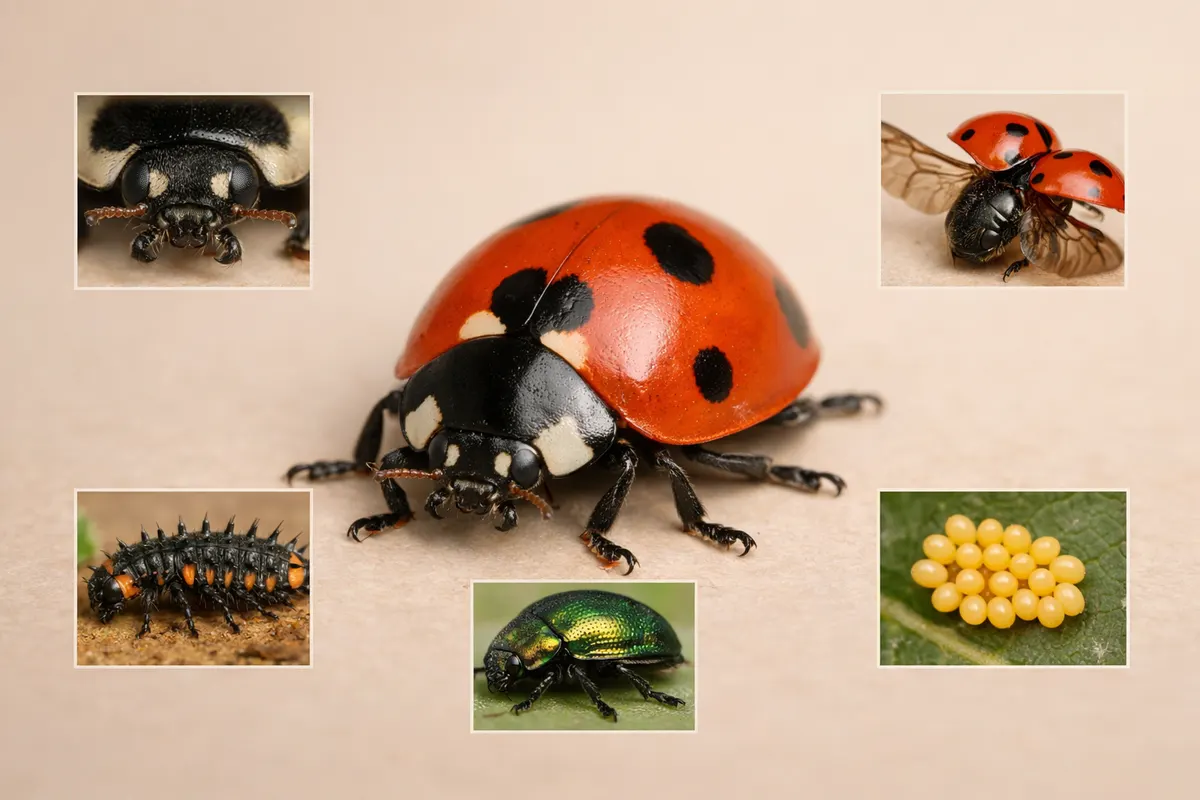
Beetle identification from a photo gives a fast, evidence-based first pass: a clear image can show body segments, elytra (wing covers), antennae type, relative size, and color patterns that narrow the group and likely species. That outcome helps decide whether you need expert verification, pest control, or simple removal.
Start by aiming for photos that show the beetle's dorsal view and one close-up of the head and antennae. Those angles let an identification tool or reviewer check the three main body regions — head, thorax, abdomen — and count visible legs and wing structure without handling the insect.
Photos alone rarely establish absolute certainty. Use a photo ID as a quick triage: it should reduce the plausible species list and recommend the next safe checks (habitat, behavior, and supplementary photos) before you act on risks or control options.

How identification works
Step 1
Snap a photo
Take a clear, well-lit photo of your item in the Bug Identifier app.
Step 2
Get an instant identification
The app reads the visible clues and returns the closest matches in seconds.
Step 3
Review the details
Compare the result with your photo, review any uncertainty, and check the suggested next steps.
Key visual signals for beetle identification
Focus on four to six visible signals a photo can prove quickly. Start with overall shape and body segmentation: beetles show a distinct head, thorax (pronotum), and elytra-covered abdomen. A dorsal photo that includes the head and pronotum helps separate major families.
Antennae shape is often decisive. Clubbed, lamellate, serrate, or filiform antennae point to different families. Likewise, count visible legs and note whether tarsi look expanded or simple; leg and tarsal features are commonly diagnostic in photographs.
Color and pattern matter, but lighting can mislead. Metallic green or bronze sheens are reliable when visible; subtle spots, stripes, or tufted hairs require close-ups. Also record size with a scale object in the frame: small beetles (a few millimeters) suggest different groups than 1–2 cm specimens.
- Body segments and elytra alignment (are the wing covers sealed or gapped?).
- Antennae type and visible tarsal segments for family-level clues.
- Surface texture: hairy, scaly, smooth, or pitted — useful for carpet beetle identification.
- Behavior and habitat visible in the photo (on plants vs. inside a pantry).
- Distinct metallic color or patterned elytra useful for spotting a japanese beetle.
- Note clicking behavior or elongated body shape when comparing click beetle vs cockroach.
What a beetle ID result includes
A useful beetle identification result lists the most likely group (family or genus) and explains which photo features supported that conclusion. Expect an evidence summary that cites visible antennae, elytra pattern, body proportions, and any measured scale you provided.
Results will also include suggested confidence — typically low, medium, or high — with notes on what additional photos or behaviors would raise confidence. The report avoids claiming absolute certainty from a single image and flags features that look ambiguous.
Where relevant, the result may include basic next steps: safe handling tips (if the bug might bite or be allergenic), likely habitat or food source, and links to example results for similar beetles so you can compare the match visually.
- Fields returned: likely group, visible supporting features, and confidence level.
- Care notes and simple safety guidance when a species may cause irritation or damage.
- Example matches and photo comparisons so you can visually confirm details.
- If you photographed a larger garden pest, guidance often references june bug identification as a common target.
Beetles often confused with other insects
Photos frequently confuse beetles with other insects or with each other. The most common lookalikes are moth-like larvae, roaches in quick photos, and other hard-bodied insects like weevils. A clear head-and-antennae shot usually resolves these errors.
When a beetle is mistaken for a pest, look specifically at wing covers and antennae: beetles have hardened elytra meeting down the centerline; cockroaches show a more flexible abdomen and long, filiform antennae without clubbing. A close-up that captures these contrasts is often enough.
- Roaches vs beetles: check elytra seam and antenna shape to rule out a cockroach; see click beetle vs cockroach notes above for comparison tips.
- Moths and scale-covered insects: note hardened wing covers and leg structure to separate beetles.
- Plant-feeding beetles like the japanese beetle are often mistaken for small metallic flies at a glance.
- Small pantry invaders and larvae can look like carpet damage carriers; include carpet beetle identification clues when you find tiny hairy adults.
Frequently asked questions
How accurate is a beetle identification from a single photo?
A single good photo can usually narrow a beetle to a family or genus, but it rarely guarantees a species-level ID. Confidence depends on visible diagnostic features: antennae type, elytra pattern, body proportions, and scale. If key structures are obscured, expect a lower confidence rating and a recommendation to provide additional angles or a scale reference.
What photos help with Japanese beetle confirmation on garden plants?
To support a Japanese beetle identification, photograph the beetle’s dorsal view showing the metallic green head and bronze elytra, plus a close-up of the legs and underside if possible. Include the feeding damage on the plant. Those images let an ID system confirm the characteristic color and feeding pattern without handling the insect.
Should I treat a small household sighting as carpet beetle infestation?
Not immediately. If the photo shows tiny, rounded beetles with tufts of hair or patterned scales, that supports carpet beetle identification, but you should check for larvae, shed skins, or fabric damage before concluding an infestation. A clear photo of the adult plus search results from likely hiding places gives the best early evidence.
How can I tell a June bug from other large brown beetles in my yard?
Good june bug identification photos capture the broad, rounded body and the stout legs used for digging, plus the coarse, often brown elytra. A size reference and a dorsal photo in natural light make it easier to separate June bugs from similar scarab species and support a higher-confidence ID.
Related guides
Use Bug Identifier to confirm your beetle photo
Snap clear photos showing the dorsal view, head/antennae, and one scale reference, then open the Bug Identifier iOS app to run a fast photo-based identification. The app returns likely groups with the visible features that support each match and suggests the safe next checks — without claiming definitive proof from a single image. Visit https://bug-identifier.app/ to get started.