
Identifying Bug Bites: A Practical Photo Checklist
A practical guide to identifying bug bites from photos and clues—what a picture can show, what it can't, and the quickest next steps to act safely.
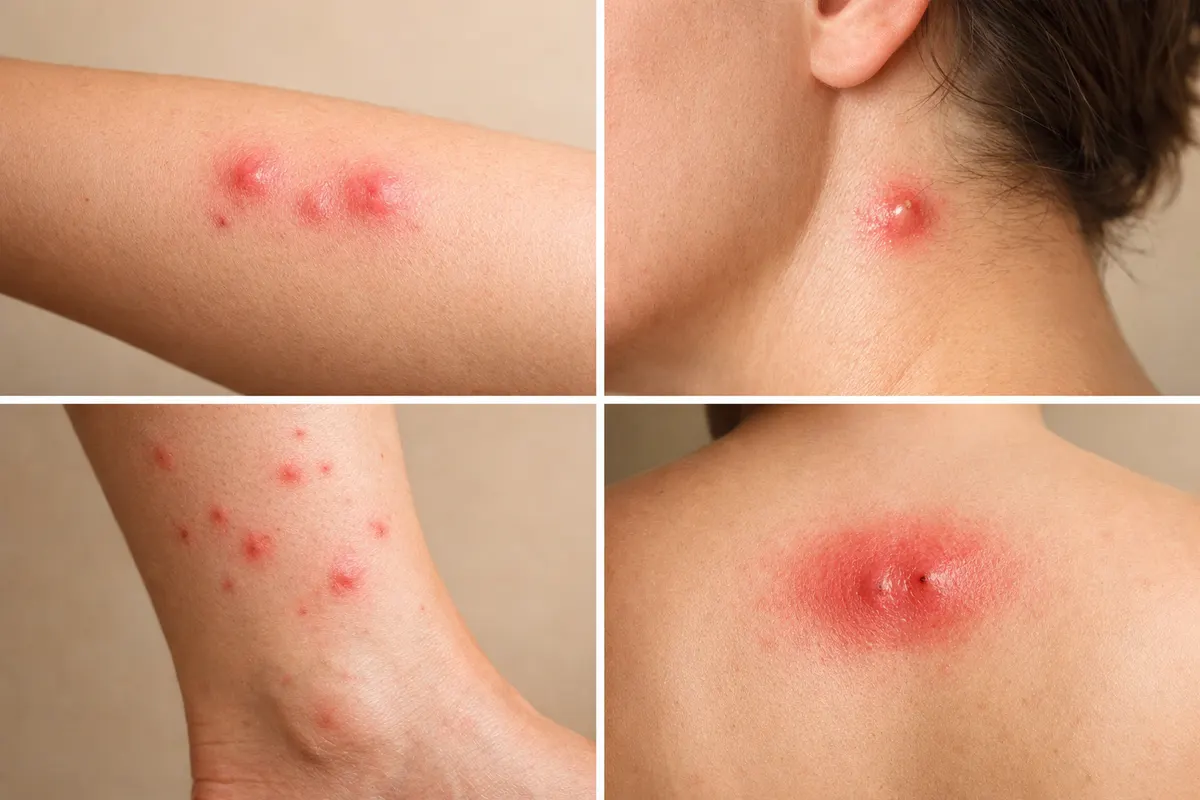
Quick answer for identifying bug bites
When people search for identifying bug bites, they usually want a fast, reliable answer from a photo. A single image can sometimes show whether a lesion looks like a bite—by revealing a central puncture, clustered pattern, or an attached tick—but it rarely proves the exact species that caused it. Context matters: timing, where on the body, and signs from the environment are equally critical.
Finding and identifying the arthropod itself provides stronger evidence than a skin pattern. Lines, clusters, and isolated bumps overlap with other causes and cannot reliably identify the culprit. Even an insect found nearby may be unrelated to the skin change.
The fastest practical sequence is to document the lesion well, check the scene for signs of bugs, and use photo-first tools as a first pass. If the bite is swollen, spreading, painful, or accompanied by fever, seek medical care rather than relying on an identification app or forum answer.
- Photos can show puncture points, clusters, and attached bugs—these are the strongest visual clues.
- Photos alone usually cannot name the exact insect species responsible for a bite.
- Contextual evidence (where you slept, pets, insect sightings) often decides whether an identification is likely.
- If systemic symptoms or rapid swelling occur, prioritize medical care over identification attempts.
What identifying bug bites actually involves
Identifying bug bites is two linked tasks: first, deciding whether a mark is a bite or something else (rash, infection, allergic reaction); second, determining which arthropod or agent likely caused it. The first step focuses on lesion features: a central punctum, raised wheal, localized swelling, or a pattern of multiple lesions. The second step needs biological and environmental clues: presence of fleas, bed bug fecal spots, or ticks attached to the skin.
In practical terms, the anatomy-focused lens used for insect identification—counting legs, looking at antennae, or checking wing shape—applies only if you can photograph the insect itself. A bite mark lacks those structures, so identification relies on patterns the insect typically leaves (for example, single tick bites versus clustered flea bites) plus situational evidence.
This distinction matters because many non-bite conditions (contact dermatitis, heat rash, viral exanthem) can mimic insect bites. Recognizing what a photo can reasonably support prevents overconfidence and guides the right next steps: better documentation, environmental search, or medical evaluation.
- Two questions: could the mark be a bite, and is there independent evidence of an arthropod? A clinician may be needed to distinguish other skin conditions.
- Anatomical ID of the insect is possible only when the insect itself is photographed or captured.
- Common lookalikes—eczema, hives, folliculitis—often need different responses than insect bites.
Key clues
Start with the lesion and immediate surroundings. Look for a central puncture or dot, a raised red welt (wheal), or a ring of inflammation. Note whether bites are isolated single lesions or appear in groups or lines. For example, bed bug bites often show multiple bites in a line or cluster on exposed skin, while flea bites are usually small groups around the ankles or lower legs and tend to be intensely itchy.
Next, collect environmental clues that change the likelihood of different culprits: recent camping (ticks or chiggers), pets with fleas, sleeping in a hotel (bed bugs), open windows at dusk (mosquitoes), or work in wooded areas (ticks). Evidence in the environment—live insects, shed skins, fecal spots on mattresses, or actual attached ticks—dramatically raises confidence.
Also check timing and symptom progression. Mosquito and flea bites usually itch quickly and resolve over a few days; tick bites can be painless initially and become a focus for infection; allergic reactions and hives may shift location or evolve rapidly. If a bite is blistering, spreading, or accompanied by fever, that points away from a harmless bite and toward medical assessment.
- Lesion features to photograph: central punctum, raised center, blistering, or necrosis.
- Pattern: single vs grouped vs linear clusters (bed bugs often cluster; ticks are usually single).
- Location on body: ankles and legs suggest fleas; exposed skin of torso and arms suggests bed bugs or mosquitoes; scalp or hairline may suggest lice.
- Environmental signals: pet scratching, mattress stains, or finding an attached tick.
- Timing: immediate swelling vs delayed reaction; systemic symptoms (fever, headache) require care.
Step-by-step workflow
1) Document the bite thoroughly. Take multiple clear photos from different angles and include a scale (a ruler or common coin) so size is clear. Photograph immediate surroundings—bedding, clothing, pet fur—where a bug might be hiding. Use natural light and avoid heavy filters that obscure texture or color.
2) Inspect the scene. Check mattress seams, pillowcases, bed frames, baseboards, and pet bedding. For ticks, examine clothing, pets, and hairline. For fleas, comb pets and look for black flecks (dried blood) and pet scratching. When you find a suspect insect, photograph it alongside the lesion and, if possible, capture it for verification (seal it in a container).
3) Compare pattern and context. If you photographed an insect, compare its features to common local culprits: ticks are dark, round, and can be seen attached; fleas are tiny and jumpy; bed bugs are flat, oval, and about the size of an apple seed. If only the lesion is visible, use pattern (linear vs clustered vs single), body location, and timing to narrow likely causes.
4) Use photo-identification tools as a first pass. A visual tool can surface likely matches and suggest next steps, but treat that result as provisional. If the tool suggests a common, low-risk offender (mosquito or flea), monitor for improvement. If there’s evidence of ticks, persistent enlargement, or systemic symptoms, seek medical or pest-control help immediately.
5) Preserve evidence and escalate when necessary. If a tick is attached, remove it properly and record the exposure and seek medical advice when appropriate; do not wait for commercial tick-testing results or use them to decide treatment. For suspected infestations (bed bugs, fleas), contact a pest professional for inspection. For severe local reaction, spreading redness, pain, or systemic symptoms, seek medical care rather than relying solely on an identification attempt.
- Photograph lesion + scale + multiple angles + surroundings.
- Search environment for insects, fecal spots, shed skins, or pet signs.
- If you find a suspect insect, photograph it next to the bite and preserve it safely.
- Use a visual ID tool only as a first pass; escalate to pros for attached ticks, infestations, or worsening symptoms.
Examples
Example 1 — Bed bug suspicion: A traveler wakes with three small red welts in a roughly straight line on the forearm after sleeping in a hotel. Photos show three raised welts with tiny central puncta and bedding with dark specks near the seam. Interpretation: the linear pattern plus mattress stains strongly supports bed bug bites. Next steps: inspect bedding and luggage, launder clothing on high heat, and consider contacting a pest professional if live bugs or additional signs are found.
Example 2 — Flea bites around ankles: Multiple tiny red bumps clustered at the ankle and lower leg; a household cat is scratching excessively and you spot small dark flecks in its fur. Photos of the lesions show several tiny papules and a pet comb reveals flea dirt. Interpretation: fleas are the likely cause. Next steps: treat the pet under veterinary guidance, vacuum and wash bedding, and monitor bites for secondary infection if scratched.
Example 3 — Attached tick: A small raised lesion with a dark object embedded at its center, photographed closely and clearly attached to the skin. Interpretation: if the attached object is verified to be a tick, this is a tick exposure; a clear photo of the removed tick may help a qualified person identify the species. Next steps: remove the tick safely (use fine-tipped tweezers), save it in a sealed container, monitor for fever or rash, and consult a healthcare provider about testing or prophylaxis based on local guidelines.
Example 4 — Mosquito vs allergic bump: A single large, intensely itchy wheal appears minutes after being outdoors and resolves in a few days without spreading. No environmental signs of infestation are found. Interpretation: likely a mosquito bite or an isolated allergic reaction. Next steps: a cool compress may ease minor discomfort; ask a pharmacist or clinician about suitable itch relief; if new or multiple lumps appear suddenly, reassess and photograph for comparison.
- Linear, clustered bites + bedding stains → bed bugs likely; inspect mattress seams and luggage.
- Small clustered bites around ankles + pet signs → fleas likely; check and treat pets.
- An attached object needs a close look; once identified as a tick, remove it promptly and seek medical advice about the exposure when appropriate.
- Single immediate wheal after outdoor exposure → mosquito or local allergic reaction; monitor and treat symptomatically.
Limitations
Photos alone often leave uncertainty. Many skin conditions mimic bites—contact dermatitis, viral rashes, scabies, drug reactions, or bacterial folliculitis. Without an insect in frame or clear environmental evidence, naming the exact bug is usually probabilistic, not definitive. This is why responsible identification emphasizes degrees of confidence: stronger (an identified arthropod observed biting), partial (strong circumstantial evidence), or low (isolated bumps with no context).
Health risk is a key boundary. If a bite is accompanied by fever, spreading redness, severe pain, numbness, or flu-like symptoms, treat the medical problem first. Do not delay seeking care to get an identification. Likewise, certain bites (ticks in regions with Lyme disease, spiders in areas with venomous species) may require rapid action regardless of diagnostic certainty.
Verification steps matter: capturing or photographing the suspect insect, documenting the environment, and preserving specimens for testing or professional review increase certainty. For infestations you suspect but cannot confirm, hire a licensed pest professional for inspection. For possible infections or allergic responses, consult a healthcare provider. No online tool or photo alone should replace a medical or professional evaluation in these high-risk situations.
The CDC advises against using commercial tick-test results for treatment decisions: https://www.cdc.gov/ticks/after-a-tick-bite/index.html. For emergency reaction signs, see the American Academy of Dermatology: https://www.aad.org/public/everyday-care/injured-skin/bites/bug-bites-see-dermatologist.
- Stronger evidence: an identified arthropod observed biting; a skin pattern alone is insufficient.
- Partial confidence: cluster or timing suggests a type, but no insect found.
- Low confidence: isolated lesion without context—could be non-bite causes.
- Seek immediate care for fever, spreading redness, severe pain, or neurological symptoms.
- For infestations, use a licensed pest inspector—photos alone rarely suffice for treatment decisions.
Related guides
Want a fast, photo-first second opinion?
After you photograph the lesion, check the environment, and preserve any suspect insect, try Bug Identifier’s Bug Bite Identifier tool as a practical first pass: https://bug-identifier.app/tools/bug-bite-identifier. Use it to compare visual clues and to get a checklist of next steps, then follow up with a healthcare provider for possible infection or a licensed pest professional for suspected infestations. The tool cannot diagnose a skin condition or determine medical urgency.
Take the next step →Frequently asked questions
Can a photo alone tell me what bit me?
A photo can sometimes show evidence that strongly suggests a culprit—an attached tick, a central punctum, or a cluster pattern—but it usually cannot prove the exact species. Photos are most useful when paired with context: where you were, whether pets are involved, and whether insects or fecal stains are present in the environment. Treat any photo-based ID as provisional and prioritize medical evaluation for worsening or systemic symptoms.
How do I tell bed bug bites from mosquito or flea bites?
Look at pattern and location. Bed bug bites often appear in linear rows or clusters on exposed skin (arms, neck, torso) and may occur after sleeping. Flea bites are commonly small, very itchy papules clustered around ankles or lower legs and often accompany pets. Mosquito bites tend to be isolated, raised itchy wheals that appear quickly after outdoor exposure. Environmental evidence—mattress stains, pet scratching, or mosquitoes in the room—helps confirm the likely cause.
When should I see a doctor about a bite?
Call emergency services for trouble breathing, throat or facial swelling, fainting, or severe dizziness after a bite or sting. Seek medical care for fever, worsening pain, spreading redness, or pus. Ask a clinician promptly about a tick exposure when relevant; do not wait for an app result or a commercial tick test.
Can I use an app to identify my bite, and what should I expect?
A photo-identification app can be a helpful first pass to surface likely matches and remind you what clues to look for. Expect a provisional result rather than a guaranteed diagnosis. Use the app after you document the lesion (clear photos, scale, and surroundings) and then follow the app’s suggested next steps—inspect the environment, preserve any found insect, and escalate to a medical or pest professional when necessary. For a tool aimed at next-step guidance, see Bug Identifier’s Bug Bite Identifier: How to Recognize, Verify, and Act at https://bug-identifier.app/blog/bug-bite-identifier.