
Types of Bug Bites Chart: Visual Clues and a Practical Checklist
A clear types of bug bites chart that shows which visual clues a photo can support, common lookalikes, and the next checks to verify identification.
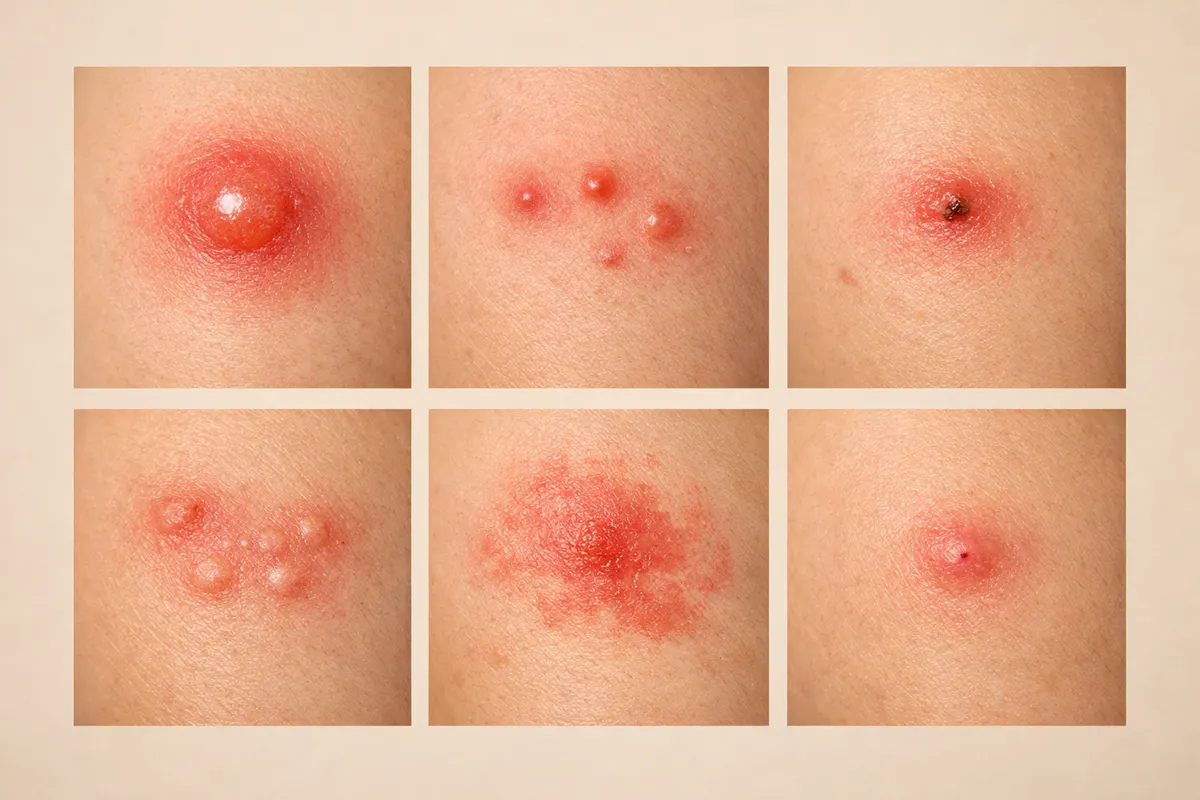
Quick answer for types of bug bites chart
A types of bug bites chart groups common bite appearances—single raised welt, clustered pinpoint bites, linear rows, or painful necrotic lesions—and links those patterns to likely culprits such as mosquitoes, fleas, bed bugs, ticks, spiders, and chiggers. The chart’s value is in narrowing possibilities, not delivering a definitive medical or species ID from one photo.
Practical short-matches you can rely on right away: single, sudden, swollen itchy bumps after being outdoors point toward mosquitoes; tiny clustered bites around the ankles commonly indicate fleas; three-or-more bites in a row or cluster on exposed skin after sleeping often suggest bed bugs; an attached tick or a spreading rash suggests a tick bite and possible medical follow-up. Each match depends on context—time, location, activities, and the presence of pests.
Use the chart as a decision tool: it helps prioritize immediate steps (wash the area, check bedding, find and remove an attached tick) and decide whether to collect more evidence (photos, specimens, environmental signs) before treating, documenting, or contacting a professional.
What a types of bug bites chart actually shows
A types of bug bites chart is a visual reference that connects bite appearance, pattern, and location to the most likely biting insects. It usually organizes entries by the skin lesion (wheal, papule, vesicle, pustule, ulcer), the bite pattern (isolated, grouped, linear), and typical body locations (ankles, arms, torso, scalp). The chart is intended to be a first-pass identification aid rather than a final diagnosis.
Charts often add short context lines: whether the insect feeds at night or day, whether bites are painful or merely itchy, and whether the insect tends to bite clothing-covered areas or exposed skin. That context matters: bed bugs feed at night on exposed areas, while ticks latch where clothing fits snugly and chiggers prefer moist skin folds, so the same-looking red dot in different places can point to different causes.
A well-made chart links bite appearance to likely life stage and behavior. For example, flea bites are usually from adult fleas on pets or carpets and appear as multiple small dots, often clustered low on the legs; carpet beetles or dermestids do not bite people but can cause dermatitis from hairs, which is a different entry you should treat as a lookalike in the chart.
Remember that a chart is a hypothesis generator. It’s most useful paired with environmental checks (do you have pets? Did you sleep somewhere new? Have you been hiking?) and a short evidence checklist—photos from different angles, timing notes, and nearby signs of the pest.
Key clues to compare on a types of bug bites chart
When you consult a types of bug bites chart, focus on the strongest, easiest-to-observe clues first. These consistently help separate common bite types and rule out lookalikes: pattern, number, and distribution; the presence of a central punctum; speed of onset and evolution; and any linked environmental evidence.
Use a methodical pass: note the bite pattern on the body (single vs cluster vs linear), check for a central dark dot or embedded tick, record how quickly the lesion developed, and look for nearby bite victims or signs such as blood stains, shed insect parts, or live pests. Those details typically narrow the possibilities more than color or slight shape differences alone.
- Pattern: single isolated welt (mosquito) vs clustered pinpoint bites (fleas) vs line or cluster with 2–5 bites (bed bugs).
- Central punctum or attached insect: visible tiny hole or an attached tick suggests tick bite or embedded arthropod.
- Onset and course: immediate painful bite (horsefly) vs delayed itchy bump that appears hours later (mosquito/flea).
- Location: lower legs and ankles (fleas), exposed areas after sleep (bed bugs), waistband/grease lines or near socks (chiggers).
- Size and swelling: large, raised welts (mosquito or large fly) vs tiny papules (fleas, mites), and presence of blisters or pustules (possible secondary infection or specific spider venoms).
- Associated signs: blood spots on sheets, live insects found in bedding, pets with fleas, or an attached tick still present.
- Number of victims: bites on multiple people in the same bed strongly favors bed bugs or lice over mosquitoes.
Step-by-step workflow for using a types of bug bites chart
Treat the chart like a triage tool. Start with evidence-gathering: take clear photos (different angles and close-up with a ruler or coin for scale), note when the bite first appeared, where you were and what you wore, and whether anyone else in the same environment was bitten. That basic record often resolves ambiguity without needing professional help.
Next, compare what you collected against the chart’s strongest clues: pattern (single vs clustered), location (ankles, torso, scalp), and timing (immediate pain vs delayed itch). Use those matches to pick the two most likely causes, not a single certainty. Then run targeted environmental checks: inspect bedding and mattress seams for dark fecal spots or molted skins if you suspect bed bugs, check pets and carpets for fleas, or search your clothing and the environment for ticks after hiking.
If the chart and your environmental checks point to an attached tick, carefully remove the tick with fine tweezers (close to the skin, steady pull) and save it for possible identification. If bed bugs are suspected, collect photos of mattress seams or live sightings and wash bedding on hot cycle; for fleas, treat pets and vacuum carpets. If symptoms include spreading redness, fever, increasing pain, or a necrotic center, stop home triage and consult a medical professional.
Finally, if you want a fast second opinion, use a dedicated photo-identification resource as a next step after you’ve gathered the evidence. Bug Identifier’s photo guidance and the related how-to checklist can help you turn chart matches into practical next actions while preserving important evidence for clinicians or pest professionals.
- Step 1 — Photograph: take multiple photos with scale and ambient-light close-ups.
- Step 2 — Log context: time, recent outdoor activities, pets, shared sleeping spaces.
- Step 3 — Compare: use pattern, location, and onset to pick top two likely causes from the chart.
- Step 4 — Inspect environment: bedding seams, pet fur, carpets, and recent outdoor sites.
- Step 5 — Act safely: remove ticks properly, launder bedding, treat pets, or contact health/pest pros as needed.
Practical examples matched to a types of bug bites chart
Example 1 — Small clustered bites around the ankles: A household with a dog and carpeting reports multiple tiny red dots, mainly around the lower legs and ankles. The chart and context point to fleas. Key confirming signs are fleas on the pet, flea dirt (small dark specks) on bedding, and bites concentrated low on the body. The practical response: treat the pet, vacuum and launder fabrics, and repeat inspections over several days.
Example 2 — Three bites in a staggered line on the forearm after sleeping: A person wakes with several red bumps aligned in a short row on exposed skin. That classic pattern favors bed bugs. Confirm by checking mattress seams, headboard cracks, and laundry for dark fecal spots. For documentation, take mattress seam photos and the bite close-ups; if found, capture a live specimen for professional identification.
Example 3 — Single large painful welt after being outdoors near horses: A sudden, painful, swollen bump that appeared immediately and felt like a sharp sting points to a horsefly or deer fly. These bites are typically solitary and painful, often with more swelling than a mosquito bite. Clean the area and monitor for worsening pain or signs of infection; seek medical care if systemic signs develop.
Example 4 — Tiny intensely itchy papules in waistline and sock areas after camping: Grouped, intensely itchy bumps in skin folds or where clothing fits suggest chigger bites. The chart shows chiggers often cause clustered, intensely itchy papules and usually resolve over a week with symptomatic treatment.
Example 5 — Attached tick or expanding rash: If a tick is observed attached or a bullseye-shaped spreading rash appears, treat this as a potential medical issue. Remove the tick carefully, save it if possible, and contact a clinician about testing and prophylaxis options.
- Flea: multiple small punctate bites near lower legs, pets showing fleas, flea dirt present.
- Bed bug: clusters or linear groups on exposed skin after sleeping; mattress signs confirm.
- Mosquito: isolated swollen itchy welts appearing shortly after outdoor exposure.
- Tick: visible attachment, central punctum, or delayed expanding rash—medical follow-up advised.
- Chigger: intensely itchy papules in tight clothing areas or skin folds after hiking/camping.
Limitations of a types of bug bites chart and when to verify
A types of bug bites chart cannot replace clinical diagnosis or species-level identification in many cases. Skin reactions vary widely among individuals depending on allergic sensitivity, previous exposures, and secondary infection. For example, hives or allergic contact dermatitis can mimic clustered insect bites, and folliculitis can look like small pustular bites. Treat the chart’s suggestions as provisional and weigh them against medical symptoms.
Photos alone are often insufficient. Lighting, image blur, and the absence of scale make lesion appearance unreliable for fine distinctions. Some medically important conditions—cellulitis, necrotic spider bites (rare), Lyme disease rash, or insect-borne infections—require symptom timelines, lab tests, or clinician judgement beyond what a chart or a single photo can provide. If you see spreading redness, fever, severe pain, numbness, or blisters that worsen, seek medical care promptly.
When to escalate to a professional or lab: an attached tick or signs of systemic illness; bites near the eyes, mouth, or major joints; suspected secondary infection; or a confirmed bed bug infestation that requires integrated pest management. For straightforward, low-risk matches (typical mosquito or flea bites without systemic signs), the chart plus home measures and monitoring is usually sufficient.
Evidence preservation matters: if you plan to consult a pest professional or clinician, keep clear photos, collect specimens in sealed containers when safe to do so, and note the time and place of exposure. For more detailed photo-checklists and verification steps, consider the site's guides such as Identifying Bug Bites: A Practical Photo Checklist and the longer guide on Bug Bite Identifier: How to Recognize, Verify, and Act.
- High-confidence outcomes: clear attached tick, live bed bug found, fleas on pets.
- Partial-confidence outcomes: typical patterns without environmental confirmation (e.g., single mosquito-like welt indoors).
- Low-confidence/uncertain: similar-looking medical conditions (hives, folliculitis, dermatitis) or poor-quality photos.
- When to contact clinicians: systemic symptoms, progressive skin changes, or bites in sensitive areas.
Related guides
Next step: turn chart clues into action
After you’ve photographed the bite, checked pattern and environment, and ruled out urgent symptoms, use a fast identification tool to run a second opinion on your evidence. Bug Identifier’s photo-guidance and the Bug Bite Identification resource can help you prioritize next actions—whether that’s laundering bedding, treating pets, or saving a specimen for a professional. For a quick photo-based check designed for this situation, see the Bug Bite Identification tool: https://bug-identifier.app/tools/bug-bite-identifier. Use it as one optional next step after your own evidence checks; do not rely on a single app result for medical or treatment decisions.
Take the next step →Frequently asked questions
Can a photo alone identify the exact insect from a bite?
No—photos help narrow possibilities but rarely confirm the exact species. A photo can show pattern, size, and a possible central punctum, which typically lets you shortlist likely culprits (mosquito, flea, bed bug, tick, etc.). However, skin reactions vary by person and can mimic other conditions like allergic dermatitis or folliculitis. Combine photos with context (where you were, pets, whether others were bitten) and environmental signs before concluding. If you need species-level identification, a captured specimen or professional inspection is usually required.
What immediate steps should I take after I discover a new bite?
First, photograph the bite from multiple angles with a ruler or coin for scale and note when it first appeared and recent activities. Clean the area with mild soap and water and apply a cold compress to reduce swelling. Inspect your bedding, clothing, and pets for signs of pests depending on the likely cause. If you find an attached tick, remove it with fine tweezers and save it in a sealed container for possible testing. Seek medical care if you develop fever, spreading redness, increased pain, or other systemic symptoms.
How do I tell bed bug bites from flea bites using a chart?
Bed bug bites commonly appear in clusters or short linear groups on exposed skin primarily after sleep; they frequently affect the arms, shoulders, neck, and torso. Flea bites are usually smaller, pinpoint red spots concentrated on lower legs and ankles and often occur in homes with pets. Use the chart’s pattern and location columns and confirm with environmental checks: mattress seams, headboard cracks, or live insects for bed bugs; fleas or flea dirt on pets and carpeting for flea infestations.
When should I see a doctor about an insect bite?
See a clinician immediately for an attached tick or if you notice rapidly spreading redness, warmth, intense pain, fever, swelling near the face or throat, or signs of systemic illness. Also consult a medical professional if a bite develops a necrotic center, large blisters, or signs of secondary infection (pus, increasing tenderness). For routine itchy bites without systemic signs, home care and monitoring are usually enough, but contact your clinician if symptoms worsen or persist.