Tiny Black Bugs in House: Common Matches and Clues
Learn which visible details on tiny black bugs in house photos are reliable, which clues are weak, and practical next steps before you trust an ID.
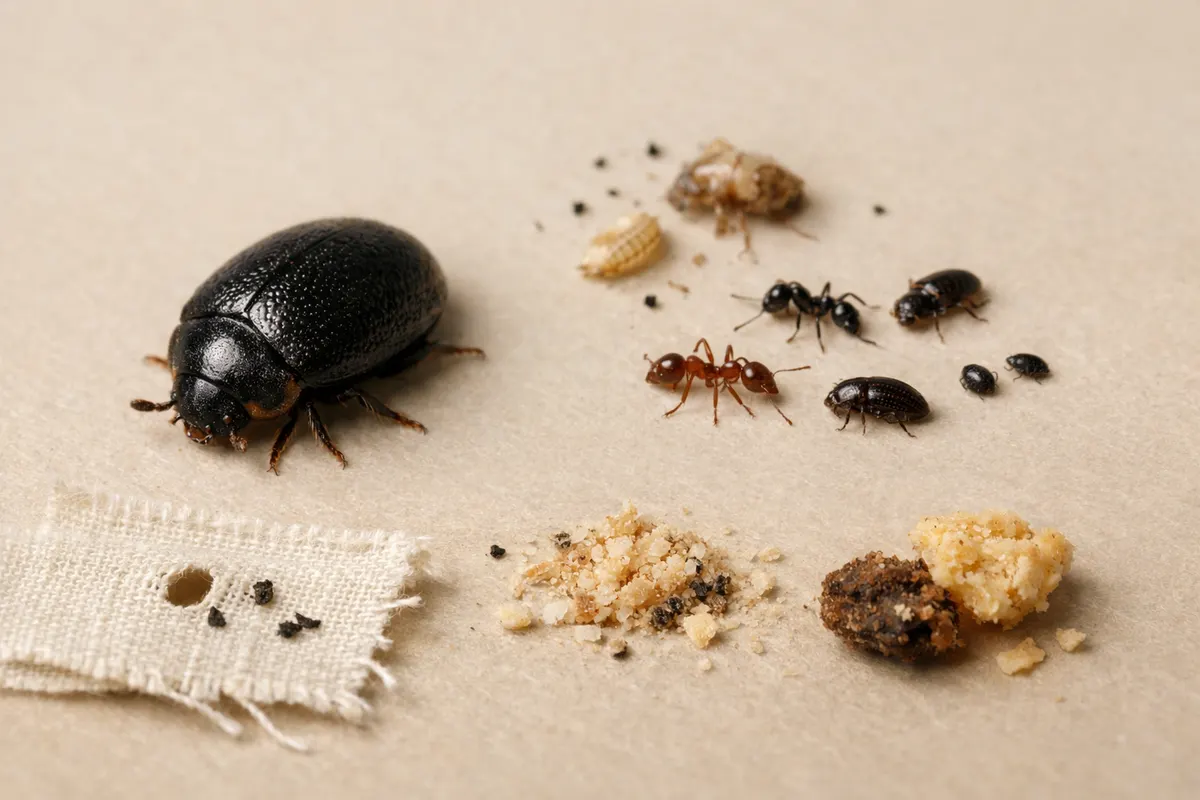
Quick answer: what photos can tell about tiny black bugs
When you see tiny black bugs in house, a single photo can narrow possibilities but rarely proves a species. Photos are most useful for showing shape, relative size, leg or wing placement, and high-contrast patterns like stripes or shining elytra. Those traits often separate major groups—ants, beetles, flies, or mites—so they’re a strong starting point.
Context matters as much as the bug itself. Where you found the insect (kitchen counter, window sill, potted soil, mattress seam), time of year, and what it was doing (feeding on crumbs, crawling up a wall, clustered near fabric) give immediate clues that a photo alone cannot supply. Combine the visible traits with context to cut down the plausible matches.
Be realistic about limits. A dark, tiny insect photographed at low resolution will frequently look like many other tiny dark insects. Treat any one-image ID as a working hypothesis: useful for deciding whether to take basic action (clean, seal cracks, or quarantine an item) but not as confirmation for pest control, medical, or conservation decisions.
- Photos reliably show: overall body shape, leg and antenna arrangement, and distinct glossy or matte textures.
- Photos weakly show: exact color tone, subtle surface hairs, or precise body proportions when resolution or angle is poor.
- Use context—location, time, behavior—to narrow likely groups before assuming a species.
Most reliable visual clues for tiny black bugs in house
Start with silhouette and body segmentation. Tiny beetles (Coleoptera) usually have a rounded or oval, hard-bodied silhouette with visible wing covers (elytra) meeting down the middle. Ants have a constricted waist and elbowed antennae; they move purposefully and often in trails. Flies show only one pair of wings and a characteristic head-thorax proportion. Even low-resolution photos often preserve these gross shapes.
Leg and antenna count, position, and proportion survive surprisingly well in phone photos. Look for long, visible antennae on each side of the head (beetles, some true bugs), very short antennae (many flies), or the obvious elbowed antennae of ants. Mites and tiny arachnids have eight legs and a fused body; spotting leg count can immediately rule groups in or out.
Texture and gloss help too. A shiny, hard surface that reflects a point light suggests a beetle’s elytra; a velvety or dull surface can point to tiny bugs like carpet beetles (larvae are fuzzy) or springtails (matte, primitive body form). Stick to traits that don’t depend on precise color—texture and reflectance patterns are more stable under variable lighting.
Relative size and scale cues (grain of fabric, crumb, ruler) make a big difference. A 2–3 mm shiny oval found near stored grains behaves differently in the ID process than a 6–8 mm crawling insect on a kitchen counter. Where possible, include an everyday object for scale or note approximate length in your report; size often separates lookalikes, for example tiny stored-product beetles versus larger ground-dwelling beetles.
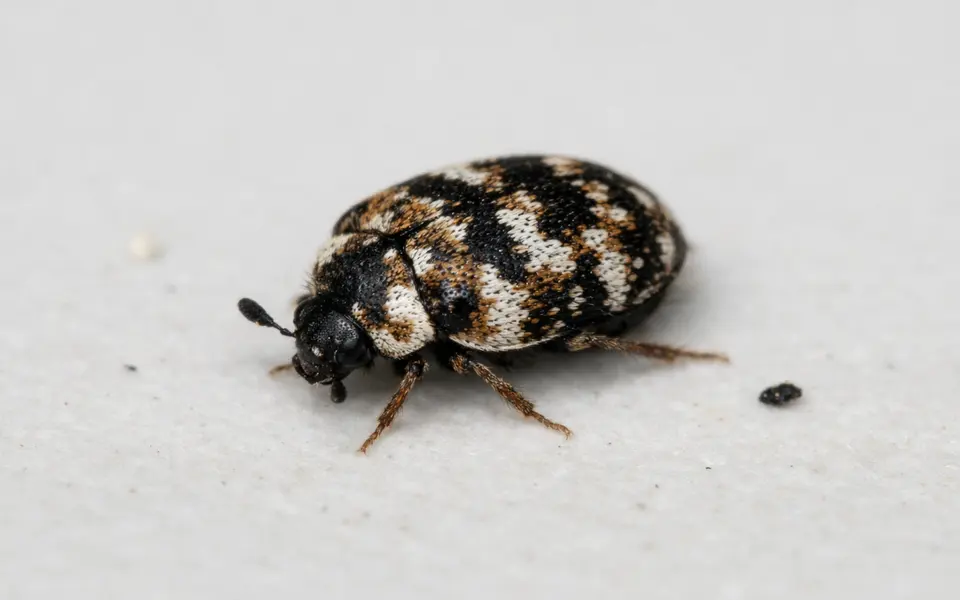
- Silhouette: oval hard-back vs elongated soft-bodied vs compact rounded shapes.
- Leg/antenna traits: elbowed antennae suggest ants; eight legs suggest mites/arachnids.
- Surface: glossy elytra (beetle) vs matte or hairy bodies (springtails, larvae).
- Scale cues: a mm-scale difference frequently changes the likely species list.
Weak signals and common photo pitfalls to avoid
Color alone is a poor identifier for tiny black bugs in house. Lighting, camera white balance, and reflections can make the same insect appear darker, lighter, or even slightly different in hue. Don’t rely on words like 'black' versus 'dark brown' from a single image unless the shape and other clues also match.
One-angle photos hide critical anatomy. A dorsal shot may show shape, but ventral features (leg segmentation, mouthparts) or wing structure are often needed to separate closely related species. If you only have one angle, note which features are visible and what you can’t see rather than guessing unseen traits.
Glare, shadows, and depth-of-field problems obscure small features. Overexposed reflections can erase texture; heavy shadows make legs disappear; shallow focus blurs small antennae. These issues turn otherwise reliable clues into false negatives—traits you think are absent may simply be hidden.
Generic lookalikes create false confidence. Many tiny beetles, immature ants, and very small flies will appear similar at a glance. Avoid using a casual visual match as proof: the same 'small black beetle' label can include multiple species with different habits and management implications.
- Avoid relying on color names alone—lighting changes perceived color.
- One-angle shots can mask key features—try to document multiple views when possible.
- Watch for glare and blur—these often remove the very clues you need.
- Be cautious with quick visual matches: many unrelated groups converge on the same small dark shape.
How to compare likely matches step by step
Create a short hypothesis list from the photo plus context. Start by grouping the insect: beetle-like, ant-like, fly-like, or mite-like. Write down the top three groups you think fit—this focuses subsequent checks and prevents jumping to a single favorite match.
Use a checklist of stable clues from the photo to reduce candidates. Items to tick off: body segmentation visible? number of legs seen? antenna shape? glossy vs fuzzy surface? approximate length? behavior or location note (e.g., near pantry, on stored cereal, on window)? Marking these confirms which groups remain plausible and which can be dropped.
Compare candidates with short targeted searches or field guides. For example, if the checklist suggests a small shiny oval beetle found in spilled flour, compare images of stored-product beetles (like grain or flour beetles) at similar scale. If the silhouette looks like an ant but lacks elbowed antennae in multiple photos, remove ants from the hypothesis list.
Keep track of confidence and next steps. If multiple clues line up (shape, antennae, location, and activity), confidence increases and a reasonable next step—seal pantry food, set a glue trap, or consult a professional—becomes justified. If confidence remains low, treat the result as a research note and gather more evidence (additional photos, live behavior notes, or a specimen in a sealed container).
- Group first: beetle-like, ant-like, fly-like, or mite-like.
- Checklist next: segmentation, legs, antennae, texture, size, and context.
- Targeted comparison: match photo traits to candidate groups with images at similar scale.
- Document confidence and choose safe next steps based on how many clues align.
Using the Bug Identifier app after checking clues
Once you’ve noted the visible clues and context, the app can act as a structured next pass. Enter the location, observed behavior, and approximate size before submitting a photo to ensure the suggestion list weights environmental clues along with visible traits. This increases useful matches and avoids overreliance on color alone.
Treat the app’s suggestions like prioritized hypotheses, not definitive IDs. Use the app’s top matches to guide what to look for next—if the app suggests stored-product beetles, inspect nearby food packages and look for tiny holes, frass, or larvae. If it suggests ants, check for trails and entry points rather than assuming infestation without further signs.
When results feel uncertain, record your findings as research notes. Save multiple photos from different angles or at a slightly higher magnification (use macro mode or a phone lens) and re-run the check. The app is most helpful when it has several consistent photos and a clear context to compare against its image database.
If you need further verification, use the app’s suggested actions to collect evidence safely—place a single specimen into a sealed container, note the date and location, and avoid exposing skin when handling unknown insects. For serious infestations, health concerns, or when pesticide treatment is being considered, treat the app’s output as a triage tool and consult a pest professional or extension agent for confirmation.
- Enter context (location, behavior, size) before submitting to improve match relevance.
- Use app suggestions as hypotheses to guide physical checks, not as final proof.
- Add more photos from multiple angles when uncertain and rerun comparisons.
- For health or heavy-control actions, seek professional confirmation beyond the app.
Related guides
Check your clues, then use Bug Identifier to prioritize next steps
After you’ve noted shape, antennae, surface texture, and context, use the Bug Identifier mobile app to generate a prioritized list of likely matches and suggested next checks. Treat the app’s suggestions as research leads—add more photos from different angles and record behavior to increase confidence. If you remain unsure or face a health or infestation risk, save your notes and consult a local pest professional for verification.

Frequently asked questions
What are the most common tiny black bugs found indoors?
Common indoor tiny black bugs include pantry beetles (like flour or drugstore beetles), small rove or carpet beetles, tiny ants, springtails in damp areas, and small flies. Which group applies depends on location and behavior: pantry pests congregate near dried food, carpet beetle larvae appear near fabrics and baseboards, springtails cluster around moist soil or drains, and ants form visible trails.
Can I identify tiny black bugs from one photo?
You can often narrow a one-photo ID to a likely group (beetle, ant, fly, mite) using silhouette, legs, and antennae, but confirming species usually needs multiple angles, scale, and context. Treat a single-photo result as a working hypothesis: it’s enough to decide basic next steps (clean, isolate items, monitor) but not to declare final identity for medical or pest-control action.
What should I photograph to improve identification?
Take at least three clear photos: a dorsal (top) view for overall shape, a close side or 45-degree view showing legs and body segmentation, and a scale reference (coin, ruler, or fabric weave). Include a short note: where you found it, what it was doing, and the approximate size in millimeters. Avoid heavy flash glare and keep the insect still or isolated behind clear glass if possible.
When should I contact a professional about tiny black bugs in house?
Contact a pest professional when you see signs of ongoing infestation (multiple live insects, shed skins, frass, damaged food or fabric), when a bite or allergy reaction occurs and the insect is unknown, or before applying chemical treatments. Use photo-based ID tools and your clues to prepare information for the professional—this speeds diagnosis and helps avoid unnecessary treatments.