
Bug Identification
Brown Recluse Spider: Identification and Photo Clues
Compare brown recluse identification clues in photos, including eye arrangement, legs and markings. Check lookalikes and the limits of a single image.
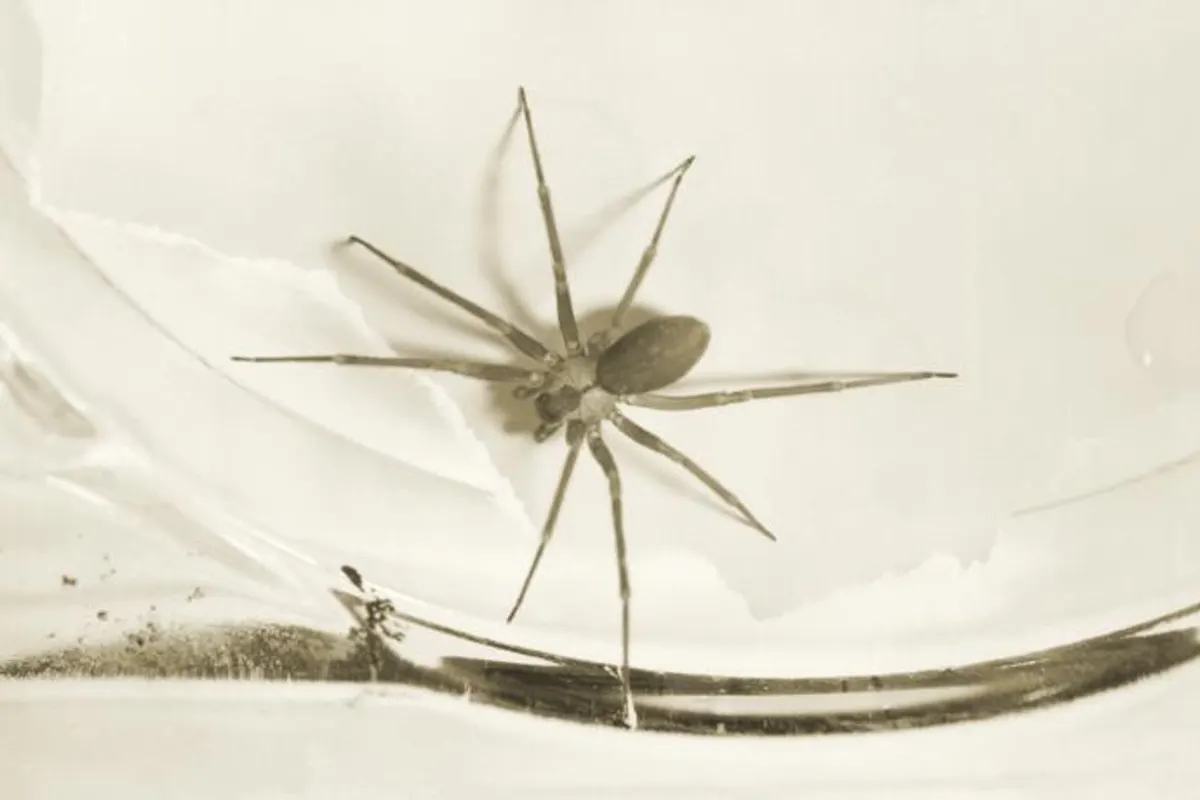
What the brown recluse spider is
The brown recluse spider (Loxosceles reclusa) is a small, reclusive house-dwelling spider best known for its bite and for subtle, diagnostic features visible in good photos. Adults have a compact body (not counting legs); typical adult body length is about 6–10 mm (roughly 1/4 to 3/8 inch), with leg span larger depending on posture. Distinguishing body length from leg span helps avoid exaggerated size reports.
A few consistent anatomical points are useful to know up front: brown recluses have six eyes arranged in three dyads (three pairs), not the usual eight eyes seen on many house spiders; they lack prominent spiny leg setae (no heavy leg spines); and they often show a faint darker dorsal mark on the cephalothorax, sometimes called a violin shape but that alone is not definitive for identification. For these diagnostic details and sized guidance, see the University of California IPM resource on recluse spiders (UC IPM (https://ipm.ucanr.edu/home-and-landscape/brown-recluse-and-other-recluse-spiders/)).
Brown recluses are typically quiet, hiding in undisturbed indoor places (closets, attics, basements) and in sheltered outdoor debris near buildings. Because many lookalikes share “brown and small” traits, firm identification depends on a combination of features and, when necessary, examination by someone with experience or by reference photos taken under good lighting and focus.
How can you identify a brown recluse spider?
Good photographic evidence and careful observation make the difference between a reasonable ID and a guess. The most reliable visible checks are: clear dorsal view to assess the cephalothorax mark (violin-like but not diagnostic alone), a focused close-up showing the eye arrangement, and legs photographed to confirm the absence of prominent spines. Lighting, scale, and focus all matter — blurred or silhouetted images lose the details you need.
If you are examining a spider in the field or from a photo, look specifically for: an overall uniform light-to-medium brown coloration (not patterned like orb-weavers), the faint dark dorsal marking on the cephalothorax, and the eye pattern of six equal-sized eyes in three well-separated pairs. No single mark proves identity by itself; the eye arrangement and lack of leg spines together are strong photographic evidence when both are visible.
Practical photo checklist: include an in-focus dorsal shot, a close lateral or frontal view that may show the eye groups, and a scale reference (a coin or ruler) kept at a safe distance. Avoid trying to pick the spider up. Instead, photograph it from a safe distance or trap it inside a clear container for later examination by a qualified identifier.
The reference photograph is a real specimen image from CDC PHIL 29504 (https://wwwn.cdc.gov/phil/Details.aspx?pid=29504), credited to CDC / Dr. J. L. Conrad (1971), in the public domain. It illustrates overall form; its eye detail is not clear enough to demonstrate the six-eye arrangement.
- Look for six eyes arranged as three pairs (not eight).
- Check that legs do not show heavy spines or prominent bristles.
- Violin-shaped mark on the cephalothorax is suggestive but not conclusive.
Brown recluse spider: key facts at a glance
This compact facts table groups attributes you can check visually or confirm with reliable references. Values apply to typical adult specimens; juveniles can look different and are harder to identify from photos.
Use the table below together with photographs that show size, eye pattern, and leg details. For authoritative verification of size and eye arrangement, see the University of California IPM page on recluse spiders (UC IPM (https://ipm.ucanr.edu/home-and-landscape/brown-recluse-and-other-recluse-spiders/)).
| Attribute | Typical detail |
|---|---|
| Adult body length (excluding legs) | About 6–10 mm (≈1/4–3/8 inch) |
| Color | Uniform light-to-medium brown, sometimes slightly darker cephalothorax |
| Eyes | Six eyes in three pairs (dyads), spaced, equal-sized |
| Leg spines | No prominent leg spines; legs thin with fine setae |
| Cephalothorax mark | Sometimes a darker violin-like mark; not diagnostic alone |
| Venom/bite | A suspected bite needs medical assessment; a skin lesion alone cannot identify the spider |
Where and when you'll see brown recluse spiders
Brown recluse spiders occur primarily in the central and southern United States where Loxosceles reclusa is established. They prefer sheltered, undisturbed spots indoors — behind stored boxes, in closets, under furniture, in basements, or in attics — and in outdoor debris or woodpiles near buildings.
Activity peaks at night; they are nocturnal and tend to remain hidden during the day. Encounters are most likely when disturbing a sleeping spider’s hiding place or when reaching into storage areas where spiders shelter. Because they avoid open, sunlit spaces, sightings in the open during daytime are less typical.
The table below summarizes common encounter settings and what to look for visually when you check a potential sighting.
| Region / setting | When you'll see it | What you’ll notice |
|---|---|---|
| Central & southern U.S. (established range) | Year-round, more activity at night | Small, pale-brown spider in sheltered indoor spots |
| Basements, attics, closets | When reaching into undisturbed storage | Hidden among boxes, clothing, or cardboard |
| Behind baseboards and inside boxes | When moving stored items | Sheltered retreats and inconspicuous silk; more than one spider may be present |
| Outdoor debris near buildings | Nighttime or when disturbed | Under rocks, woodpiles, or loose bark |
Brown recluse vs wolf spider: common lookalikes and photo cues
Several brown, small-to-medium spiders are commonly mistaken for brown recluses. Among the most frequent are wolf spiders, grass spiders, and cellar spiders. Wolf spiders are stockier, often patterned, and have eight eyes arranged in characteristic rows; they also have robust legs with visible spination and a different body posture. A clear frontal or dorsal photo will usually reveal eye count and leg detail that separate these species.
Wolf spiders are active hunters often seen in the open and have a distinct eye arrangement (eight eyes, including a large forward-facing pair). In contrast, brown recluses are reclusive, less patterned, with six eyes in three pairs and no prominent leg spines — features that a sharp photograph can confirm.
Other common confusions include male cellar spiders (Pholcidae) and some small funnel weavers. When possible, capture multiple focused angles: dorsal, frontal (eye area), and a leg close-up. If you need help, tools such as the site’s spider photo identifier can provide a first-pass comparison, and an expert reviewer or entomologist can confirm using detailed images.
- Wolf spiders (robust, patterned, eight eyes) — often misidentified as recluses.
- Cellar spiders (long legs, delicate bodies) — different habit and leg proportions.
- Funnel weavers and grass spiders (striping/patterning) — usually show dorsal patterning absent in recluses.
Care and handling
Don’t handle a spider with bare hands or gloves if you suspect it may be a brown recluse. The safest immediate actions are to avoid direct contact, take clear photos from a safe distance, and isolate the area where the spider was found so it cannot be disturbed by children or pets.
If you need to secure a specimen for later identification, use a clear container: place the container over the spider and slide a stiff card beneath to trap it without touching. Photograph the trapped spider through the container for scale and detail. If you are uncomfortable doing this, contact a local pest professional or an entomology service for safe collection.
If there is a suspected bite, seek medical advice promptly. For questions about symptoms and when to seek care, see our related resource on bug bites: https://bug-identifier.app/identify/bug-bite-identification.
Frequently asked questions
How can I tell whether a small brown spider in my garage is a brown recluse?
Look for a combination of features: a small (6–10 mm) uniformly brown body, a faint darker dorsal marking on the cephalothorax, six eyes in three pairs (if you can get a clear frontal photo), and legs without strong spines. Photograph the spider from multiple angles with a scale reference and compare those photos to authoritative images; a single trait like a violin-shaped mark is not enough for a confident ID.
What should I do if a spider bites me and I suspect it might be a brown recluse?
If you have a bite with concerning symptoms (increasing pain, spreading redness, or an area that becomes pale and necrotic), seek medical attention promptly. Preserve any available photos of the spider or capture the specimen safely for identification if possible, but prioritize medical care for notable symptoms rather than specimen handling.
How to identify a brown recluse when I only have a blurred phone photo?
Blurry photos usually remove the critical details needed—eye arrangement and leg texture—so you should not rely on them. Try to get clearer images from multiple angles without exposing yourself: steady the camera, use zoom rather than moving closer, add a scale reference, and take both dorsal and frontal shots. If you cannot obtain clear photos, treat the sighting as uncertain and follow safe isolation and avoidance measures.
Brown recluse vs wolf spider: which photo features will reliably separate them?
Focus on eyes and leg details. Wolf spiders have eight eyes in a characteristic arrangement (including a prominent pair up front) and often have patterned abdomens and more robust, spined legs. Brown recluses show six eyes in three pairs, a more uniform brown color, and legs without prominent spines. A clear photo of the head/eye area and a dorsal view will usually allow you to separate the two.
Related guides
Get a tentative photo identification
Try the spider identifier (https://bug-identifier.app/tools/spider-identifier) for a photo-based suggestion. Compare it with the eye, leg, and body features described here and seek expert identification when needed. A photo result cannot diagnose a bite.
Take the next step →